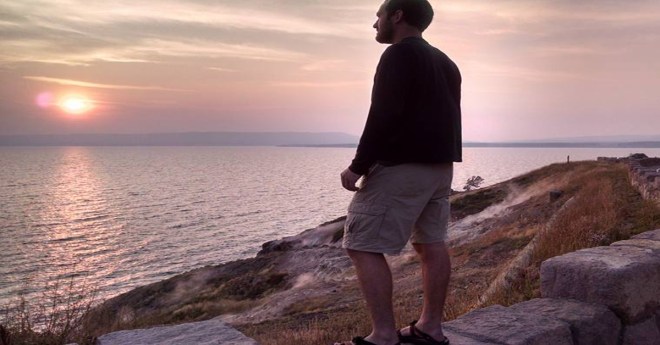
“Tell me how he died.”
“I will tell you how he lived.”—The Last Samurai
January 25th marked the one-year anniversary of the death of my best friend, Kevin (a day we Catholics also call “feast day”). He was a constant in my life in high school, college, and beyond: from road trips to bourbon country and Canada to late nights talking theology over growlers of beer at the seminary, to standing as the best man at my wedding. Throughout our manageable outings of mischief through the years, Kevin was in no short supply of encouragement, thoughtful advice, and incredible wisdom beyond his 33 years of age.
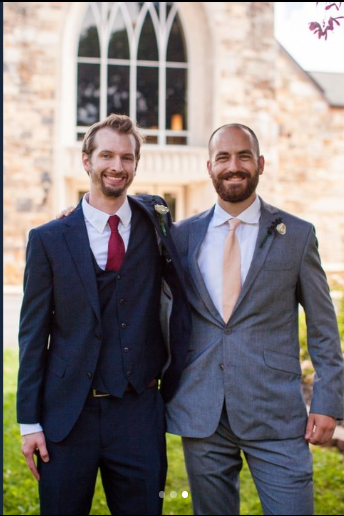
While making the 50-or-so-mile drive down from Fairfax, Virginia to visit his grave and his family in Little Washington, I considered the best of those lessons that not only have helped shape me into the man I am today, but have also put in place the foundational values that all men need to return to.
3. Getting Back To the Dirty Jobs
“The skills gap is a reflection of what we value. To close the gap, we need to change the way the country feels about work.“–Mike Rowe while speaking to the U.S. Senate Committee on Commerce, Science and Transportation, 11 May 2011.
One of Kevin’s most significant criticisms of the world was of the clear and obvious push towards one specific form of higher education so that we can get an office job. Growing up, that was, to a degree, the message in my household: go to college, get your degree, get a job and be set for life.
But when the final step in that reasoning–getting a job–does not come to fruition for several years, it should be an indication that it is time to go a different direction. For me, it took a stern look and stern words from Kevin between Toronto to Montreal to show that it was time to move on; that that world had said “no” so many times and simply did not want me then, and that there were so many occupations that desperately needed someone like me, but weren’t being filled.
And what he meant was that those office jobs–though valuable, critical, and requiring a lot of unique skills whatever they may be–are not for everyone, nor are they far superior to those trades and occupations that we as a society need every single day: the clerks and associates at the grocery stores, the specialists in manufacturing, mechanics, barbers, plumbers, electricians, HVAC specialists. These are the jobs that need to be filled in order to keep us alive as a functional, stable society.
(Even the liquor stores in Virginia were classified as “essential” during the pandemic restrictions, but that was more of a tax thing than anything else)
Not long after that trip, I took a job at a golf course in New Jersey and kept it for nearly two years before joining a Virginia installation company and, eventually, finding myself in a marketing agency. Most recently, that same conversation carried me to accept a position at my local wine store following six months of unemployment early on during the pandemic, and I’ve been with that store for nearly three years. Although I am still looking for that next step in my career, the priorities by which I go about searching for it have changed significantly and will be explained once we get to philosophy number three.
2. Don’t Follow Your Passion, But Take It With You
These immortal words of Dirty Jobs‘ Mike Rowe epitomize Kevin’s own career journey. Following graduation, he accepted a job as a manager at a sawmill in Northern Neck, Virginia, only to realize that it was not for him because it did not allow him to be passionate about something, especially as he discerned between married life and the priesthood.

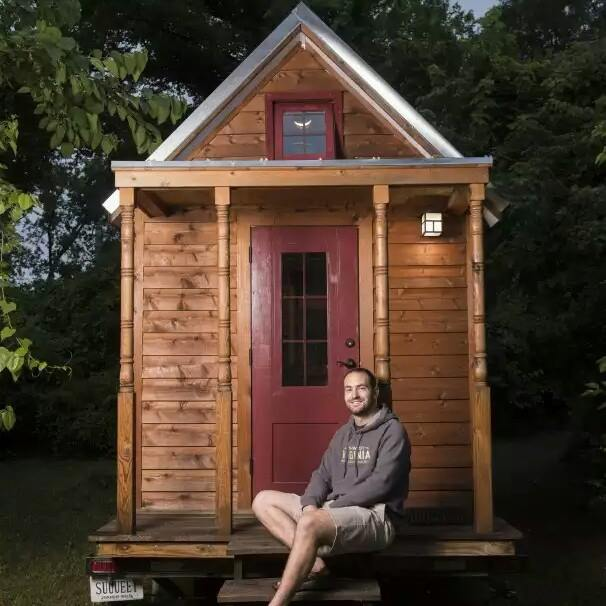
So, he returned to the woods with Virginia State Parks on a part-time basis, which allowed him to travel, build his tiny house and microhouse (which I helped him build on a couple of visits), and serve his community, all of which actually helped guide him towards engaging with what he was really passionate about: his spirituality, his relationship with God and his ministry to those most in need.
From those several years of discernment while working with Virginia State Parks to his vocational internship in Petersburg, Virginia, through his seminarian formation at the Theological College at CUA and later through the Glenmary order, to his final position as Director of Campus Ministry at Virginia Military Institute before passing, Kevin was able to carry his passion for God and to serve those around him through all different forms of work that he did.
Here’s a testimony from some of the cadets at VMI on the Kevin they knew.
*During his seminarian discernment, Kevin began a project built around two of his great passions: attending Mass and hiking the Appalachian. This website was built with the intention of providing hikers with accurate details and up-to-date Mass times at Catholic parishes local to the Appalachian Trail. Check it out: https://campanarius.com/.
1. Vocation vs Career
This is probably the most important lesson when it came to careers. Especially today, with so much uncertainty following the pandemic restrictions and current downsizing from major tech companies–not to mention the threat of another possible recession–Kevin’s lesson on vocation vs. career has truly helped me reshape my mindset in remembering who I am as opposed to strictly identifying myself by what I do for work.
In today’s world, there are far too many aspects of our lives and aspirations that can be misconstrued with regard to our identity and purpose: salaries, social status, promotions, lucrative career paths and milestones. Working hard towards these aspirations or goals is not wrong or immoral in any way, but they bare no weight compared to our vocations as fathers, mothers, husbands, wives, primary caregivers to those we love, or members of a community called the human race. They are nothing more than a means of support that allows us to be the best spouse, parent, caregiver or volunteer.
Whether you are doing something you love as a career or if you are doing something temporarily while between careers (as so many are starting to find themselves in now), remember that it is only a supporting cast member to who you are as a person.
Conclusion
It has taken me over a year to come to put this–just a mere trio of examples of Kevin’s philosophy–into something that barely bares a resemblance to an organized document . The past year has been nothing less than an agonizing struggle, with multiple moments of mourning between the hours of every single day (and that’s in addition to the years-long challenges of seeking my next career move while tending to the needs of our son’s regular medical needs; he actually has surgery scheduled less than 24 hours following the publishing of this piece).
But as we continue to heal from his unexpected loss, it is of the utmost importance to not only remember the great times and the love he shared with everyone he met, but also to share the lessons we learned from him that are very much crucial to how we continue to live with him watching from above.
- Be open to broadening your horizons and be willing to try something different.
- Carry your passion with you to everything you do.
- Remember that your career is only secondary to your vocation and the relationships with the people and family you love.
No matter how difficult it may be, once you change your mindset and go forth with these three philosophies in mind, I promise you will find a sense of dignity and happiness and will be able to look beyond any darkness you may be facing.
Thank you so much, Kevin. Rest in peace.
But don’t sleep in too late. Because it’s never goodbye.
It’s just until next time.
“Do you ever get the feeling that people are incapable of not caring? People are amazing.” —The Whale
 Eric Kambach
One thought on “3 Philosophies of Manliness from my Best Man”